

If you’ve started looking into Invisalign treatment, you may have heard the term “Invisalign® attachments” and wondered what they are. Many patients feel uncertain when they learn attachments will be part of their orthodontic treatment. You might be picturing something large or obvious, but attachments are actually small, discreet features that may help support your aligners in achieving tooth movements.
While attachments may seem like a minor detail, they may play a helpful role in supporting specific tooth movements during your Invisalign journey. These tiny, tooth-coloured bumps are bonded to your teeth and work in conjunction with your aligner trays to support more precise tooth movements. Results vary for each patient, but attachments may support complex tooth movements during treatment.
Attachments come in different shapes—rectangular, ellipsoid, bevelled, and round—and each shape is designed to support particular types of tooth movement. In this article, we’ll explain what each shape does, why dentists choose specific shapes for different teeth, and how they may support your treatment. Understanding how Invisalign attachments work can help you feel more at ease about your personalised treatment plan.
Contents Navigation
- Summary of the Content:
- Understanding Invisalign® Treatment Attachments: The Basics
- Invisalign® Attachments vs. Invisalign® Buttons: What's the Difference?
- How the Different-Shaped Invisalign® Attachments Work in Assisting Tooth Movement
- How Dentists Determine Which Invisalign Aligner Attachments You Need
- The Attachment Process: Application and Removal
- Final Thoughts
Summary of the Content:
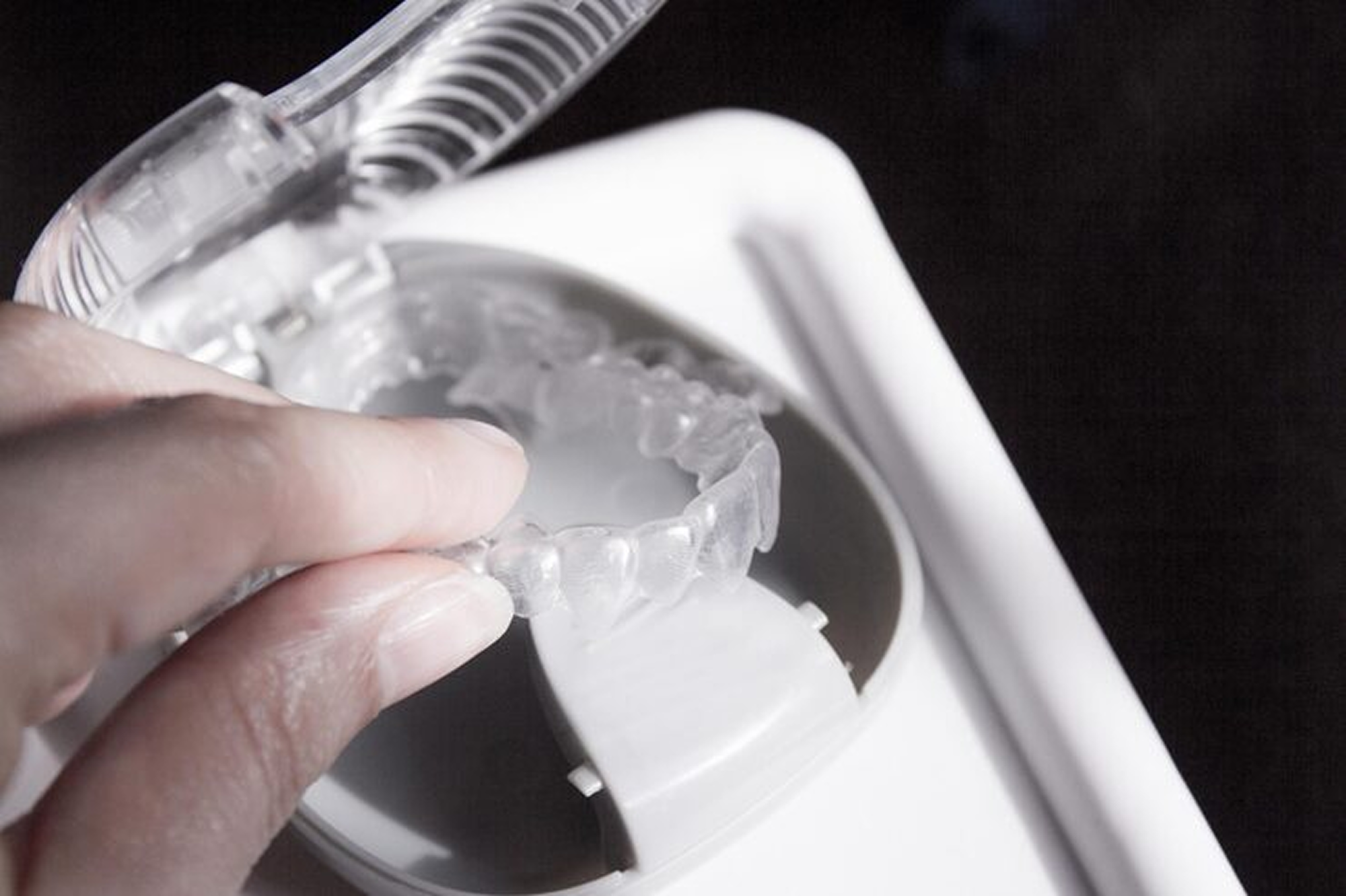
- Invisalign® attachments are small, tooth-coloured composite bumps that dentists bond to your teeth to support aligners in tooth movement during treatment.
- Different attachment shapes serve specific purposes throughout your orthodontic journey. Rectangular attachments are designed to support rotation and vertical movements, while ellipsoid shapes are designed to support complex, multi-directional adjustments. Bevelled attachments are designed to support root positioning and bite alignment, and round attachments are designed to provide general grip and support.
- Your dentist uses advanced 3D modelling technology to plan which attachment shapes you need based on your specific treatment goals and the movements your teeth require.
- Attachments are designed to be relatively discreet and temporary. They’re colour-matched to your natural teeth and will be removed by your dentist when your treatment is complete.
- The application process typically takes 20-45 minutes and is generally comfortable. Removal is quick and straightforward when your treatment ends.
Understanding Invisalign® Treatment Attachments: The Basics
Invisalign® attachments are small bumps made from tooth-coloured dental composite material that your dentist bonds to specific teeth during your treatment. Think of them as small handles or anchor points that support your clear aligners in tooth control. Without these features, the smooth surface of your teeth may not provide sufficient grip for aligners to support certain complex tooth movements.
The way attachments work is quite straightforward. When you wear your aligners, the aligner trays fit snugly over your teeth and the attachments. The shape and placement of each attachment allow the aligner to apply pressure in a specific direction. This targeted force is designed to support tooth movement toward the planned position. For example, rotating a tooth or moving it vertically may require force applied at specific angles—attachments are designed to provide surface area and positioning to support these movements.
Many tooth movements may be supported by the use of attachments. Simple spacing issues or minor crowding might be addressed with aligners alone. However, complex cases involving rotations, vertical adjustments, or bite alignment often include attachments as part of the treatment plan. Most Invisalign patients will require at least some attachments, which is completely normal. The number and placement vary depending on your treatment plan.
Attachments remain bonded to your teeth throughout your entire treatment. They’re temporary and will be removed when your orthodontic treatment is complete. Your dentist carefully plans which teeth need attachments and what shapes may be suitable for your specific movements.
This explanation is for general information only and should not be used as a substitute for personalised dental advice. During your consultation, your dentist will discuss your specific needs.
Invisalign® Attachments vs. Invisalign® Buttons: What's the Difference?
Patients sometimes wonder about the difference between attachments and buttons, as both may appear in treatment plans. Although they may look similar, they serve distinct functions. Understanding this distinction can help you know what to expect.
Attachments are integrated into your treatment plan to support specific tooth movements. They’re passive features that work with the shape of your aligner to create targeted forces. Attachments help aligners grip your teeth more securely and support tooth movements such as rotations or vertical adjustments. They’re strategically placed where your treatment requires additional support.
Invisalign buttons, on the other hand, typically function as anchor points for rubber bands (elastics). Buttons are active features that hold elastics directly to help with bite adjustments or to pull teeth in specific directions. While attachments work passively with your aligner’s shape, buttons actively hold elastics that create additional force.
Some patients may have both attachments for tooth movement and buttons for elastics, depending on their treatment goals. For example, you might have rectangular attachments to help rotate teeth and buttons to support bite alignment with elastics. Your dentist will explain which features are part of your personalised treatment plan and what each does.
The practical difference is simple: attachments assist the aligner in moving teeth, while buttons provide a place to attach rubber bands. Both are part of your treatment plan, but they work in different ways.
How the Different-Shaped Invisalign® Attachments Work in Assisting Tooth Movement
The shape of each attachment isn’t random—each design is specifically chosen to support particular types of tooth movement. Your dentist uses advanced 3D modelling software to plan which shapes will be placed on which teeth. This computer modelling calculates the exact forces needed to move your teeth from their current position to their desired alignment.
Your treatment may require multiple types of movement. For example, some teeth may need rotation, others may require vertical adjustment, and your bite alignment may need to be addressed. In these cases, you may have several different attachment shapes across your upper and lower teeth. Each shape creates a different type of grip or force direction, allowing your aligners to apply targeted force on specific teeth.
Attachment placement is planned as part of your treatment outcomes. Your dentist has carefully planned which shapes go where, considering factors such as tooth angulation, the direction of movement required, and the amount of force needed. This systematic approach is designed to support tooth movement throughout your treatment process.
Rectangular Attachments: For Rotation and Vertical Movement
Rectangular attachments are among the most commonly used types in Invisalign treatment. These small, rectangular bumps are designed to support tooth rotation and vertical tooth movement. You’ll often see them placed on premolars and canines that need significant movement.
The rectangular shape provides a broad, flat surface for your aligner to push against. This creates the torque needed to rotate teeth that are turned or twisted. When your aligner fits over a rectangular attachment, it can apply force to support tooth alignment. The attachment serves as a handle, providing the aligner with leverage.
Rectangular attachments also assist with vertical movements—bringing teeth up (intrusion) or moving them down (extrusion). The shape allows force to be directed vertically, which helps adjust the position of your teeth in your jaw. For example, if one tooth sits higher than others and needs to be brought down, a rectangular attachment may support the aligner in applying downward pressure.
These attachments typically measure approximately 3mm in height and 2mm in width, although size can vary depending on the specific tooth and the required movement. While they’re slightly larger than some other shapes, they remain discreet and blend with your natural tooth colour. You may notice them more than smaller attachments, but they’re designed to be as unobtrusive as possible while still providing the support your treatment needs.
Ellipsoid (Oval) Attachments: For Complex Multi-Directional Movements
Ellipsoid attachments have an oval or egg-like shape. These attachments are particularly designed for complex tooth movements that require force in multiple directions. Their smooth, rounded form allows pressure to be distributed more evenly across the tooth surface.
The curved shape of ellipsoid attachments enables movements in several directions—including extrusion (bringing teeth down through the gum), intrusion (pushing teeth up), and some rotational adjustments. This makes them suitable for teeth that require movement in more than one direction during treatment. For example, a tooth that requires rotation while also being adjusted vertically may be managed with an ellipsoid attachment.
Ellipsoid attachments are often placed on front teeth where aesthetics are especially important. Their smooth, rounded shape is less noticeable than angular designs, which helps maintain the discreet treatment option that many patients choose Invisalign for. The curves blend naturally with tooth contours, making them relatively inconspicuous.
Ellipsoid attachments may play a role in treatment for intricate tooth adjustments. The curved surface works in conjunction with your aligner to guide teeth through complex movement patterns, providing both grip and directional force. This versatility makes ellipsoid shapes a commonly used feature in personalised treatment plans that involve complex movements.
Bevelled Rectangular Attachments: For Root Movement and Tipping
Bevelled attachments have a distinctive slanted or angled edge—they’re thicker on one side and gradually taper to a thinner edge on the other. This angled design creates specific directional forces that help control root position and tooth angulation.
The primary function of bevelled attachments is to support tipping movements, where a tooth needs to tilt at a particular angle. Unlike traditional braces, which can adjust both the crown (visible part) and root of a tooth relatively easily, clear aligners require additional support to control root positioning. Bevelled attachments are designed to support by directing force not just on the visible part of the tooth but also toward the root.
These attachments are particularly important for addressing bite issues such as overbites, underbites, or open bites. Proper root angulation affects how your upper and lower teeth come together and plays a major role in long-term stability. Appropriate root angulation is considered during treatment planning. Individual results vary, and retention protocols are important for maintaining alignment.
Bevelled attachments can be oriented horizontally or vertically, depending on the direction of force needed. A horizontal bevelled attachment might help with intrusion or extrusion forces, while the angled edge controls the tipping direction. Think of the bevelled shape as a ramp or wedge that guides the tooth to tilt in a specific direction as the aligner applies pressure.
Your dentist places bevelled attachments strategically as part of your bite alignment treatment plan. Attachment placement is planned as part of your treatment. Individual results vary, and retention is important for maintaining alignment.
Round (Dome) Attachments: For General Grip and Support
Round or dome-shaped attachments are small, ball-like bumps that are designed to support general aligner retention and grip. While they may not be as specific as rectangular or bevelled shapes, they serve important functions in your treatment process.
The primary role of round attachments is to support the positioning of aligners. These attachments create a snug fit between your aligner and tooth surface, which is especially helpful when other teeth are undergoing complex movements. Round attachments are designed to support aligner positioning and consistent pressure application.
Round attachments are commonly placed on molars and premolars, where a general grip is beneficial. Their smooth, rounded form makes them comfortable and less likely to cause discomfort against your gums or cheeks. Unlike angular shapes that might feel more noticeable, dome attachments blend smoothly with tooth contours.
These attachments might be used in combination with other shaped attachments for comprehensive treatment. For example, you might have rectangular attachments on canines that need rotation, bevelled attachments on front teeth for bite adjustments, and round attachments on molars for general support. Each attachment is part of your treatment plan.
Just because round attachments are simpler in design doesn’t mean they’re less important. The grip they provide aims to support the distribution of force during treatment.
Optimised Attachments: Custom-Designed for Your Specific Case
Some patients notice attachment shapes in their treatment plan that don’t quite match the standard rectangular, ellipsoid, bevelled, or round designs. These are called optimised attachments, sometimes referred to as SmartForce attachments, and they’re custom-made specifically for individual treatment needs.
Optimised attachments are created by Invisalign’s advanced planning software based on 3D modelling of your exact tooth movements. The system analyses your teeth, the movements required, and the forces needed, then generates unique geometric shapes or combinations designed precisely for your case. These attachments may appear differently from standard shapes because they’re tailored to address specific challenges, such as multi-directional movements, complex root control, or bite adjustments.
The personalised approach of optimised attachments reflects the precision that is a feature of Invisalign treatment planning for many patients. If your treatment plan shows unusual-looking attachment shapes, they’re likely optimised designs created specifically to support your desired alignment. This customisation is one of the features that help Invisalign address complex cases that might have been more difficult to manage in the past.
Dentists can also modify or combine standard attachment types based on clinical experience and specific treatment goals. For example, a patient might need a hybrid attachment that combines features of rectangular and bevelled shapes to achieve particular tooth movements. Whether your attachments are standard shapes or optimised designs, each is planned to support the planned tooth movements as part of your personalised treatment plan.
How Dentists Determine Which Invisalign Aligner Attachments You Need
The process of selecting the necessary Invisalign® attachments isn’t guesswork—it’s based on comprehensive treatment planning utilising advanced digital technology. Your dentist uses a special 3D modelling software to map out every tooth movement from the start of your treatment to the desired final result.
During the planning process, your dentist creates a digital representation of your teeth and simulates how they’ll move through each stage of treatment. The software analyses which teeth need to move and how, then recommends specific attachment types and placement locations. This system takes into account factors such as the direction of movement, the amount of force required, tooth anatomy, and the complexity of the movements needed.
Experienced dentists often review and modify these recommendations based on clinical knowledge. While the software provides helpful guidance, your dentist’s knowledge plays a major role in finalising your treatment plan. They consider your specific oral health needs, aesthetic concerns, and treatment goals when determining the placement of attachments.
Several factors influence which attachments you’ll need. The severity of misalignment affects the number of attachments required; more complex tooth movements typically require additional attachment support. The types of movements needed (rotation, vertical adjustment, bite alignment) determine which shapes are chosen. Tooth anatomy varies between people, so attachment placement is adjusted to suit your individual teeth. Aesthetic concerns are also considered, particularly for front teeth, where visibility is a concern.
Not every Invisalign patient needs attachments. In some cases, minor alignment issues such as simple spacing or slight crowding can be managed with aligners alone. Generally, treatments involving rotations, vertical tooth movements, or bite issues often benefit from the use of attachments. Needing attachments doesn’t mean your case is more difficult; it simply means certain movements require additional support for your treatment plan.
The number of attachments varies widely between patients. Some people might have only 2-3 attachments, while others may have 10-15 or more, depending on treatment complexity. This variation is normal and reflects the customised nature of Invisalign treatment. Your dentist will explain how many attachments your treatment requires and where they’ll be placed.
This systematic approach is used to plan the placement of attachments. Treatment plans are personalised, so no two patients have identical attachment patterns. This planning approach is part of your personalised treatment. Individual results vary.
The Attachment Process: Application and Removal
Understanding what happens during attachment application and removal can help alleviate any anxiety you may feel. While attachments play a beneficial role in your treatment, the process of placing and removing them is straightforward.
Application Process
Your dentist applies attachments during a dedicated appointment. The process typically takes 20-45 minutes and generally does not require anaesthesia. Individual experiences may vary. The procedure is designed to be comfortable, though individual experiences vary; you may feel mild pressure as attachments are placed.
Here’s what happens during application:
- Your dentist thoroughly cleans and dries your teeth to create a clean surface for the bonding process.
- A template aligner with spaces for attachments is prepared—this guide shows exactly where each attachment will be placed.
- Tooth-coloured composite resin (the same material used for dental fillings) is placed into the template spaces.
- The template is carefully positioned over your teeth, allowing the composite to be placed in the proper locations.
- A special light is used to harden the composite material, which typically takes only a few seconds per attachment.
- The template is removed, leaving the hardened attachments bonded to your teeth.
- Your dentist shapes and polishes each attachment to create smooth surfaces that won’t irritate your mouth.
The attachments are colour-matched to your natural tooth colour, which helps them blend in. While you’ll be able to feel them with your tongue at first, most patients adjust to the sensation within a few days. The composite material is designed to stay bonded throughout your treatment process.
Maintenance During Treatment
Once placed, attachments stay bonded to your teeth throughout your entire treatment. You don’t remove them when you change aligner trays—they remain in place as you progress through each set of aligners. This stability is designed to support consistent force direction as your teeth gradually shift.
Occasionally, an attachment may come off. This can happen if you bite something hard or if the bonding agent loosens. If an attachment detaches, contact your dentist to have it replaced. While a missing attachment isn’t typically an emergency, it may affect how your aligners work on that particular tooth. Continue wearing your aligners as usual and schedule an appointment to have the attachment rebonded.
Warning signs that an attachment has come off include noticing that your aligner feels loose in one area, seeing a visible gap between the aligner and tooth, or feeling a missing bump when you run your tongue over your teeth. Your dentist can quickly replace a detached attachment using the same process as the original application.
Some treatment plans involve adding or removing certain attachments mid-treatment as part of the planned progression. As your teeth move into better alignment, some attachments may no longer be needed, while others might be added to support the next phase of movement. Your dentist will let you know if your plan includes any attachment adjustments.
Removal After Treatment
When your treatment is complete and your teeth have reached their planned position, your dentist removes all attachments. The removal process typically takes about 10-15 minutes. Individual experiences may vary.
Your dentist uses a special tool to lift each attachment off the surface of your tooth. The composite material is carefully removed without damaging your tooth enamel. After all attachments are removed, your dentist polishes each tooth surface to create a smooth finish. When performed properly by a registered dentist, the removal process is designed to preserve your enamel.
Your teeth may feel slightly different for a day or two after removal, smoother and perhaps a bit sensitive, but this sensation passes quickly. You’ll likely be fitted for retainers at this appointment to support the retention of your alignment. Individual results vary, and ongoing retention is important.
The entire attachment process, from application through treatment to removal, is designed to be as comfortable and straightforward as possible. Understanding what to expect can help you feel more relaxed about this aspect of your Invisalign journey.
Final Thoughts
Understanding the different shapes of Invisalign attachments helps you appreciate the precision and customisation that goes into your treatment plan. Rectangular attachments support rotation and vertical movements, while ellipsoid shapes enable complex multi-directional adjustments. Bevelled attachments help with root positioning and bite alignment, and round attachments provide general grip and stability. Each shape serves a specific function, and together they support your clear aligners in tooth movement.
Your dentist carefully selects attachment shapes based on the tooth movements required by your treatment. This personalised approach uses 3D modelling technology as part of treatment planning. Individual results vary. While the attachments themselves are small and temporary, they are part of the treatment approach designed to support tooth movements.
Attachments are a normal part of Invisalign treatment for most patients. They’re designed to be discreet and to support tooth movements as part of your treatment plan. Learning about how attachments work may have answered questions about what to expect during your orthodontic treatment.
If you’re considering Invisalign treatment or have questions about attachments and how they might feature in your personalised treatment plan, the team at Enso Dental North Perth is here to help. We take time to explain each aspect of treatment, including attachment placement, so you can feel informed throughout your journey towards better alignment. Book a consultation with us to discuss your smile goals and learn more about how Invisalign treatment may be suitable for your orthodontic needs.